December 4, 2013

How to Enrich Your Learning Environment with Sign Language (Summary Post)

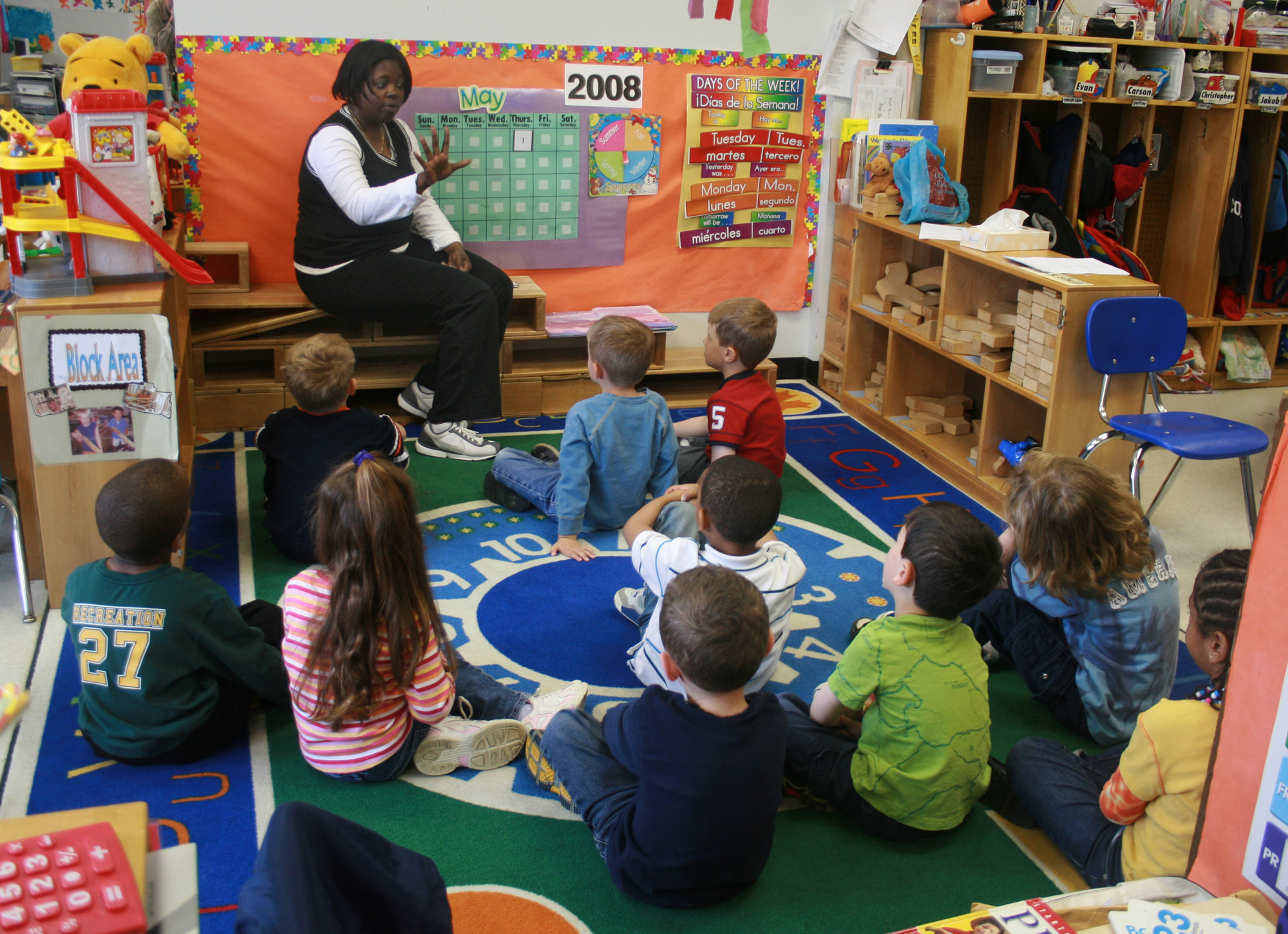
Photo Credit: K. Prochovnic, 2012
Recently, I've written several posts about the benefits of signing with hearing children of all ages (infants/toddlers, preschoolers, and school-aged kids) and how to weave sign language into your own learning environment. This information is drawn from a popular workshop I teach entitled, "Our Hands are Full: How to Enrich Your Learning Environment with Sign Language."

The workshop title is meant to suggest that teachers, librarians, parents and caregivers are BUSY (Our HANDS are FULL), but our hands can also be TOOLS for communication (meaning they are FULL of potential and opportunity).

Each post in the series offers practical tips and information about the benefits of sign language and how to incorporate ASL into your home, classroom and/or library programming. You can find links for each post below:

Enrich Your Learning Environment with Sign Language Series:

Post #1: Introduction and Research Links

Post #2: How Sign Language Can Help with Concentration

Post #3: Sign Language Keeps Hands Busy with Something Permissible and Positive

Post #4: Sign Language Develops Fine Motor Skills (Pencil Practice!)

Post #5: Sign Language Engages Multiple Senses

Post #6: Sign Language is a Natural and Effective Classroom Management Tool 

Post #7: Sign Language Can Be a Tool To Help Kids Use Their Manners

Post #8: How the Sign, "Stop" Can Help Kids Safely and Respectfully Communicate Frustration

Post #9: How to Play "The Quiet Game"

Post #10: Sign Language Can Bridge the Communication Gap in Bi-Lingual Learning Environments

I will continue to add to this series over time, so keep checking back (or sign up to follow my blog via the links in the upper right column of this page). If you have specific questions you'd like me to address, or if you're interested in scheduling your own workshop (in person, or via SKYPE), let me know in the comment section below, or get in touch through the contact links at SmallTalk Learning. You can also find me on Facebook and Twitter. Happy Signing!

December 3, 2013

Enrich Your Learning Environment with Sign Language: Post #3

Click Here for Creative Commons Photo Credit 
One of my favorite benefits of signing with children is that it keeps their hands busy with something permissible and positive.

Several years ago my son played basketball with a VERY active classmate. This was the kid who was constantly moving and fidgeting and who required frequent redirection to stay on (or to get back on) task.

During a particularly memorable basketball game, this kid was on the court during the same shift as my son with an index finger up each of his nostrils shouting (in a nasally voice), "Pass me the ball! I'm open. I'm open." I will never forget that image (or the comments from my son on the way home from the game, indicating that he did not want to touch the ball after this kid had it in his hands).

I remember thinking at the time that this kid NEEDED sign language in his life. Seriously. If there was ever a child that could benefit from having something positive and permissible to do with his hands, this was the child!

Young children are busy by nature. It's developmentally appropriate for them to MOVE their little bodies. And yet, so many classroom lessons require sitting still (in some cases, for much too long).  

Signing is a great way to give active children (particularly your kinesthetic learners) a way to move while they are learning and while they are officially "on task."

In my last post, I offered some ideas for how to incorporate signing into your read aloud story times. To build on this idea, consider teaching a "sign of the day" (or a "sign of the week") at the beginning of each day (or week). Ask your kids to keep their ears open for the key word and to sign the word each time they hear it. For example, if they key word is wait, each time you say something like, "I'll wait until voices are off," students will have an opportunity to sign wait.

Ask your particularly fidgety kids to sign the alphabet (or finger spell their name) if they they need to move when it's not an ideal "moving time."

Here is a resource to help you implement these ideas: In the beginning of each of my books in the Story Time Series there is a page of multicultural alphabet handshapes (beautifully illustrated by Stephanie Bauer). My publisher, ABDO Publishing Group, makes this page (and the full glossaries for all 16 books in the series) available for free download via their website (click here for the direct download of the alphabet handshapes, or click here and scroll to the bottom of the page, past the Star Wars info, for links to the glossaries and several other free sign language goodies on ABDO's site).

I hope you'll try these ideas and then use the contact form to the left (or leave a comment below) to let me know how it goes. I love hearing YOUR sign language success stories!

November 7, 2013

Enrich Your Learning Environment with Sign Language: Post #2

Click Here for Image Credit
As promised in my opening post in this series, this week's post is about how sign language can help with concentration. To see this in action, give your students at least one specific word to listen for when you read a story aloud. For example, focus on the word color if you are reading the book, "See the Colors," or summer if you are reading the book "Four Seasons! Five Senses!" Ask students to sign the word each time they hear it in the text. I usually say something like, "My job will be to read the story out loud. Your job is to listen to the story, and sign the word _____ each time you hear it." I find that kids are really excited to help in this way, and by helping, they concentrate their attention on me and the story I'm reading.

If you've ever read a cumulative story to a child or group of students you know that it's not uncommon that kids will chant along with you as you read the story. However, with a classroom full of students, you can't always hear who is/is not participating. By incorporating sign language, you give yourself a visual indicator of who is listening (and/or who is comprehending in the language you are using). This can be especially helpful in bilingual or multilingual classrooms, but it is definitely helpful in monolingual classrooms as well.

ABDO Publishing Group
For example, if you ask kids to focus on a word that is part of a repeating phrase, (such as silly in the book, "Silly Sue"), you'll notice that some kids will sign the focus word(s) before you actually read them on each new page or stanza). This helps you "see" who has identified a pattern in the story and/or is developing proficiency with the key literacy skill of prediction.

This one tool helps me "assess" an unfamiliar group of students in a very short time. I can quickly identify my good listeners and my "high flyers," (and I can also get a sense of who appears engaged, but may not yet have the skills of pattern identification/ prediction and/or comprehension in the dominant classroom language).

I've also noticed that this tool helps students with self regulation. When *most* students are signing, it's not uncommon that the non-signing students will look at other students and then self-adjust. Whether lack of participation is due to concentration/attention/ behavior-related issues or comprehension/literacy skill issues, the visual cue of other nearby learners signing key words helps the non-participating students get on track.

These benefits should be enough reason to start signing with the kids you work with, but alas, there are many more benefits I'll share in future posts. In the meantime, I'd love to hear your success stories signing with the children you parent or work with!

November 1, 2013

Enrich Your Learning Environment With Sign Language: Post #1

Click Here for Link to Photo Credit from Creative Commons
This post marks the beginning of a new series of posts where I will share information about the benefits of signing with hearing children of all ages (infants/toddlers, preschoolers, and school-aged kids) and offer suggestions for how to weave sign language into your own learning environment. This information is drawn from a popular workshop I teach entitled, "Our Hands are Full: How to Enrich Your Learning Environment with Sign Language."

The workshop title is meant to suggest that teachers, librarians, parents and caregivers are BUSY (Our HANDS are FULL), but our hands can also be TOOLS for communication (meaning they are FULL of potential and opportunity).

So let's start with some introductory information:

1) ASL = American Sign Language

2) ASL is the sign language used by people in North America.

3) Sign language benefits children of all ages:

*Babies can sign before they talk and sign language helps babies develop/strengthen language and early literacy skills.

*Sign language helps preschoolers/early readers learn how to read and spell and it can help all children follow directions and express themselves.

Want some evidence? Here are links to additional information/studies about the language and literacy/early literacy benefits of sign language:

Signing with Babies and Children (a white paper that offers a comprehensive summary of the academic research on the impact of signing on cognitive, linguistic and social-emotional development commissioned by the makers of Signing Time).

Click Here for Image Credit
Changing Brains (a science program for non-scientists from the University of Oregon's Brain Lab that offers information and recommendations based on scientific evidence for parents, educators, and policymakers on topics including language and motor skill development).


Click Here for Image Credit
Dancing with Words: Signing for Hearing Children's Literacy (the classic text for those seeking to advance the literacy of children through the use of sign language, by Dr. Marilyn Daniels).


Sign Language and the Brain (a summary of research from the University of Washington).

What Sign Language Can Teach Your Child (an article from Education.com)

*Sign language can even help your aging brain stay sharp! Want more details?  Click here for a summary of a research study presented at the American Academy of Neurology's 63rd Annual Meeting).

*Interesting Factoid: BSL (British Sign Language) is different than ASL (even though people from England and people from the U.S. both speak English). For a more detailed discussion, click here.

*Another Interesting Factoid: ASL has a French influence. Why? Because French scholars came to the U.S. to help us start our first educational organizations for the Deaf. For a more detailed discussion, click here.

Okay, enough of all that bookish information! Do you want practical tips and information about the benefits of sign language and how to incorporate ASL into your home, classroom, and/or library programming? Stay tuned! I will share new ideas with each new post. Next up: How sign language helps with concentration.

If you're interested in scheduling your own workshop (in person, or via SKYPE), let me know in the comment section below, or get in touch through the contact links at SmallTalk Learning, or you can find me on Facebook. I'd also love to know if you have any questions you'd like me to address.

Until next time!  Happy Signing!

October 16, 2013

Discombobulated Frenzy of Wonderful Snippets From Our Summer Exchange Experience

And now for a discombobulated frenzy of wonderful snippets from our summer exchange experience to wind down this series of posts:

Seize the moment. We had a four-week window of time with our most recent exchange student. Those weeks were action packed and memorable. (It essentially took us the remainder of the summer to recover from all the fun, but it was worth it!).

Lazy is not my thing, but I'm learning to go with the flow. As we neared the end of our recent exchange experience, and I once again asked our student what he wanted to do before he returned home, he said, "Have a lazy day." This was joined by cheers from my two kids. Chill mom. So I did.

The power of suggestion. I put a stack of board games on our kitchen counter and we worked (or played) our way through them throughout the summer. We played more board games and had more family game nights this past few months than any summer I can remember.

Soak up the simple things. The laughter. The wrestling. The music. The accent. The snickering of kids sharing taboo words in their respective languages. The visit to Voodoo Donuts and the pink box that was flattened and brought back to Spain as a souvenir.

Capture the moment. I planned to send our exchange student home with a photo book of memories, so I snapped pictures all summer long. Now I, too, have a vast collection of memorable photos. My favorites are the ones I took just to "capture the moment" or the space/place.

Food. There were so many foodie spots we wanted to take our exchange students to, and I realized how much of my being centers on food. When we hosted our student from Korea, we took her to the Asian grocery and then she cooked us a traditional family dish. Yum!

Ask. Talk. Listen. Many great conversations started with a probing question or cultural comparison. The classic, "Do you do this here/there?" kinds of questions. We covered politics, school, bedtimes, dating, shopping, guns/weapons, manners ("Is it rude to ask a woman her age here? "At home it's rude to keep your hands under the table during a meal"), routines and traditions ("We eat a big lunch and a small dinner, and our dinner is eaten much later at night"), and common foods (we learned about Spanish omelets, and we introduced meatloaf and cornbread).

Find out. We looked so many things up when our exchange student was visiting. If he asked a question and we didn't know the answer, we looked it up. We look things up during our ordinary life, too, but not quite as often. Now that my kids are older, I usually encourage them to look things up on their own. If they aren't motivated enough to find out, the learning opportunity tends to escape. Yes, it's good to encourage kids to do their own research, but it's also okay for parents to look things up to keep the interest level up and/or get the conversation going.

Realize that kids squabble. Get over it. Good luck. It drives me nuts when my kids bicker and argue.
However, I noticed that I didn't get as annoyed when my kids were involved in rivalries or spats with their exchange brother. I actually found it amusing. I didn't feel compelled to mediate or pontificate. I let them have at it, and if they tried to drag me into it, I gave the problem right back to them. Somehow it felt more about "them" and less about "me" and I could let them own the argument and the consequences. When wrestling got out of hand and resulted in minor injuries, I found myself saying, "Wow, it looks like someone got hurt." There were no lectures about settling down or reminders about the consequences of being physical. When arguing involved words and raised voices, I found myself chuckling about how much stronger my exchange student's accent was when he was mad, and I was intrigued with his sense of indignation. I had a sense of pride when my own kids stood up for one another (they really do care about each other), and I felt a sense of validation when they competed for our exchange student's attention (because that's what kids do). Somehow, I think this recent exchange experience made me more accepting of sibling rivalry. I'm trying to hang onto that vibe and stay out of the way, so my own two kids can learn to problem solve with each other.

It's nice to have friends in our home. It seems we entertain more frequently when we have an exchange student in town. Our local friends and family want to meet the student, and our home becomes a hub of activity. There was a stretch of about 14 days this past summer where there was at least one "extra" person sitting at our dinner table. Good times.

It's nice to have friends in other parts of the world. Some of our dearest friends live in Perth, Australia. We met them on a cobblestone path in Santorini, Greece about 20 years ago. Our families have traveled to each others' countries, and we have high hopes of meeting up again somewhere in the world. And, because of our exchange experiences, we now have friends in South Korea and Spain. I feel good that my kids are even more excited about traveling (and that at least one of them is thinking about the possibilities for her own exchange experiences in the future). Technology makes it easy for my kids to be in regular contact with both of their exchange siblings. I anticipate their relationships with these special people will continue to grow and develop into the future. Trips will be planned. Life events will be shared. A new generation of kids will be put onto airplanes someday to meet family in another country. The world will feel smaller and more interconnected because of a summer exchange that started back in 2013.

So how does this discussion (that I've carried on for weeks!) tie into my work and the themes of this blog? For starters, I've broadened my definition of literacy. My family's exchange experiences have enriched my cultural literacy and inspired my whole family to improve our Spanish language literacy. I've reflected on the experience and drawn connections that will inform my teaching, writing, and parenting. I've been inspired to write new stories and develop new classes so I can share my experiences and learnings with others. For me, that's what lifelong learning is all about: Immersing myself into new experiences, applying what I've learned to what I already do and know, and then circling back with others to share my insights and gain new perspectives. I welcome your perspectives any time!

October 10, 2013

Resources for Arranging International Student Exchanges

If I didn't scare you away with my last post, you might be wondering who you should contact if you want to host an exchange student. Here are some of the organizations I've worked with and/or been in contact with in the Portland (Oregon) area:

American Education Center (AEC). This is the organization we worked with for our summer 2011 exchange (when we hosted a college-aged young woman from Korea). It's my understanding that this organization focuses on exchange programs for students from different parts of Asia. Some of their programs are for high school aged students, but several of their programs are for college aged students and even for med students. For the program we hosted, the exchange student was in Portland for one month. The first week they were here they stayed in dorms on the campus of Portland Statue University. At the end of the first week, host families picked up their student(s) and brought them home. For the remaining three weeks, the exchange students went to school from approximately 8 AM to 5 PM every week day, and they were with their host families on evenings and weekends (although some weekends there were group activities/field trips that the students participated in). Our main job was to feed our student three meals a day (with lunch being a sack lunch), show her the walking route to our nearest Trimet bus stop, give her a place to sleep/shower, and involve her in family activities when she was with us on evenings and weekends. At the end of the program there was a banquet for exchange students and their host families.

Northwest International Student Exchange (NISE). This was the organization we worked with for our summer 2013 exchange (when we hosted a 14-year old boy from Spain). The particular exchange program we hosted was called a 30-day 24-7 exchange. What that means is that the exchange was for 30 days, and we would have the student with us 24-7 for all 30 days. In other programs (like the program mentioned above, and some other programs offered by NISE), the exchange student is involved in other activities (such as English classes and field trips) throughout the day (and on some evenings and weekends). We really enjoyed having our exchange student with us 24-7.

Council on International Educational Exchange (CIEE). This organization has opportunities for hosting high school students, and has study abroad, teaching abroad and work/travel opportunities. I've not hosted one of their students (yet!), but I have interacted with some of their staff and was impressed with their program offerings. The programs I'm aware of that they offer are during the school year (and typically for a full school year). There are other programs that are shorter (or there are cases where you might "split" a student's visit with another host family, i.e. you host them for 1/2 of the school year and another family hosts them for the other half of the school year).

Rotary. This organization has a well-established record of supporting and encouraging study abroad programs. It's my understanding that when exchange students come to the US for a school year, they are typically "rotated" between three different host families during their stay. This means that no one family must host for a full school year and it means that the student gets to learn about our culture via their experiences in there different families. I've not worked with Rotary's exchange program before, but one of my colleagues has, and she can't say enough good things about it. Get in touch with your local Rotary Club if you want more information about their programs.

I would love to hear about other organizations you've worked with (either as a host family or as for a study/teach abroad experience).

Next week I'll bring this series of posts to a close with a discombobulated frenzy of wonderful snippets from our family's summer 2013 exchange experience.

October 2, 2013

Hosting an Exchange Student: The Dark Side

I have a dirty little secret: As I've enthusiastically shared my family's positive experiences hosting exchange students, I've received a few reports about others' less than ideal experiences. For example: One person said that her teenaged female exchange student arrived with a suitcase full of birth control devices and a one-tracked mind: Visiting Portland's downtown nightclubs. Apparently "under-aged clubbing" is the norm in the town she's from. Similarly, another person said that her female exchange student (around 14-years of age) was very flirtatious and had inappropriate physical boundaries with her college-aged son (she sat too close to him and tried to sit on his lap). Someone else said that their high school-aged exchange student lit up a cigarette in their house without asking, and another person said their college-aged exchange student told her own (grade school-aged) child to "shut up." Each one of these people said they would never host an exchange student again.

Now granted, I haven't personally experienced these particular situations myself, but I do have to say that in each of these cases, when I heard the host parent explain their "exchange student horror story" (and that was how these stories were characterized), my reaction was that each of these situations were opportunities to learn about others' personal/cultural norms and to teach about our own personal/cultural norms. I realize I didn't have to "live through these experiences," and maybe I'm really missing the boat here, but I don't see the absolute horror in these stories.

I've traveled enough places to know that there are other cultures that are a lot less hung up about sex and sexuality than our culture. A quick visit to the post card section of just about any port town in Greece will illustrate (quite graphically) my point. Different cultures also have different needs for personal space, and different levels of tolerance for touch. Smoking is another area of distinction. I've dined in European cafes where the waiter had a lit cigarette hanging from his mouth when he brought plates of food to our table. Not my idea of appetizing.

Language can also be tricky. Important things really do get lost in the translation. I have to wonder if the family who had to endure their child being told to "shut up" merely missed an opportunity to educate their exchange student that that's an especially strong term in our culture. One of our exchange students had the habit of saying "I want to kill you," or "I'm going to kill you" to my kids. Those are strong words, but we soon realized that it was likely a routine phrasing of something he spoke/heard at home because we read similar references in the emails from his mom (e.g. "I told him I'd kill him if he doesn't behave himself"), and we've heard his grandmother use the term when we've Skyped with her. If this exchange student was going to attend school in our school system, I would have made a point to let him know that he should avoid that particular phrase, but I never did get around to mentioning it. I am curious what the equivalent phrase is in Spanish, and if it's used regularly in casual conversation, or if it's more of a "family thing."

We have had situations come up during our exchange experiences that other folks might have been bothered by. For example, one morning our exchange student stormed out of the bedroom he shared with my son. He was piping mad, and stomped down the hallway, muttering to himself in both English and Spanish. Apparently my son had tired of waiting for his "brother" to wake up (and with all due respect, it was past 10:00 AM), so he started doing noisy, annoying things. Pablo woke to the sound of my son belting out, "God Bless America." He was not amused.

In fact, he was in a grumpy funk off and on for most of the day. It finally came to a head when the boys were in the basement and my son refused to help with a clean up project they were supposed to do together (my son was too tired). Eventually Pablo stormed up the stairs to "tell on" on my son and to argue his case about how infuriating it was that now he was tired: "He wasn't tired this morning. No, he wants to sing all morning long. Now he's too tired to get our work done. . . " And that's when I knew that this kid genuinely felt at home. He was comfortable enough to show his emotions. Comfortable enough to protest the injustices bestowed upon him by his younger "brother," and confident enough to call upon "mom" for help. So I sent him back downstairs and told him this was a problem they needed to solve together. And before long they were rolling on the floor wrestling, and the house was filled with boisterous laughter once again.