October 25, 2022

Have Swag Will Travel: UP AND ADAM, by Debbie Zapata

Dear readers, I'm pleased to bring you another post in my blog series, Have Swag, Will Travel: Tips for Planning Book Events.

Today's guest is author, Debbie Zapata, who shares her experiences planning inclusive book events and story times, featuring her debut picture book, UP AND ADAM, illustrated by Yong Ling Kang (Kids Can Press, May 2022). Debbie's insights and resources are helpful year round, but they are especially timely in October, which is Down syndrome awareness month

Take it away, Debbie!

by Debbie Zapata and Yong Ling Kang

Storytime for All: UP AND ADAM

by Debbie Zapata

Thanks so much for having me, Dawn, on your fab kidlit blog! I launched my debut picture book recently. I knew it would be a wild ride, so I cofounded Kidlit Caravan, a troupe of authors with debut picture books new in ‘22. A debut group is a great way to surround yourself with writers on the same journey who can cheer one another on and celebrate our book birthdays together.

Image Source: Debbie Zapata

Up and Adam, released in May 2022 (Kids Can Press, illustrated by Yong Ling Kang). Adam, a young boy with Down syndrome, and his dog, Up, help their community after a big storm. When the Mayor asks the community for help, Up and Adam spring into action and lend a hand wherever they can. But it turns out, Adam’s most important contribution is one he doesn’t even think about—his smile. Adam’s open-hearted and infectious smile lights the pages as he lifts spirits all over town.

As a child I loved to write stories. It wasn’t until my son was born with Down syndrome that the story concept for Up and Adam took shape. Seeing my work in print has been a tremendous joy because I believe in a world in which all children can see themselves in the pages of a book. Only about 3% of children’s picture books include a prominent character with a disability. Up and Adam features a protagonist with Down syndrome and focuses on the character’s abilities. I hope it inspires children to see how everyone can make a difference in their community.

The book, Up and Adam is designed for readers of all ages and abilities. It is an uplifting story that celebrates individuality, volunteerism, and community. The best part of it being out in the world, is that I get to meet readers at inclusive storytime events and school visits. 

Once an event is scheduled, I get to work on marketing. I let people know that all ages and abilities are welcome. I like to incorporate help from my son. 


Image Source: Debbie Zapata


I advertise that a range of craft choices will be available. I initially did this in order to address a range of abilities. However, at the first Up and Adam storytime event, I saw that all kids chose based on their mood or personal preference. I realize that not just kids, but all people make different choices based on what they need at any given time. It is by tuning in to what each person needs that we open up a world filled with compassion, empathy, and connection.

There is a fun scene in the story at Up and Adam’s neighborhood pizzeria. So, I offer a pizza decorating craft project that has a variety of choices including:

Paper plate decorating with precut pizza toppings and variety of glue stick sizes

Pizza decorating sheets printed on paper to color with different size markers

Pizza decorating sheets laminated to decorate with playdoh toppings

Laminated cheese pizza printout to decorate with Velcro pizza toppings

Sticker pizza slices to decorate with toppings stickers


Image Source: Debbie Zapata

I bring along a number of visual schedules for anyone who may find it easier to participate if they know what is occurring during inclusive storytime.

Image Source: Debbie Zapata

I have endless ideas for activities for all ages and abilities. I often print out fun word searches and bring along a collection of writing instruments including adaptive pencils. 

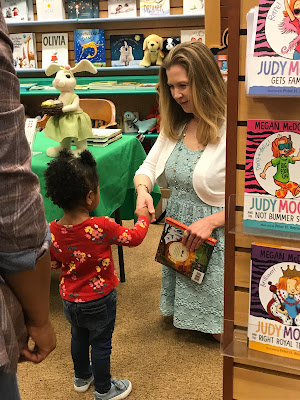
I love meeting my son’s friends and teachers who recognize my son’s traits in the story. I also love making new friends, signing books, and hearing what it’s like for their family to see a character who has Down syndrome in a picture book that focuses on his abilities. An American Sign Language interpreter is at the book reading to interpret the story alongside the reader. I’ll ask a friend to hold up another copy of the book so everyone can see the pictures. When I read to a large group, I do a digital visual presentation of the book.

Image Source: Debbie Zapata

I appreciate that my local indie Book People chose to shelve Up and Adam in the section called ‘Being Me.’ Some people want my son to sign their copy of the book. I ordered stickers that act as his personalization (I hope this makes you smile) and he writes his name below.

Image Source: Debbie Zapata


It is an honor to visit schools that provide education to children of all abilities in an inclusive setting. Kids enjoy meeting Up and Adam and often find it hard to say goodbye. I like to leave a little something with the kids.

Image Source: Debbie Zapata

A little storytime swag goes a long way. I like to offer kids a choice between two stickers (i.e. happy face or flower) and then a choice between two different colors. They love picking a sticker just for them! Thanks to my wonderful publisher Kids Can Press, I can also share Up and Adam coloring and activity pages

Image Source: Debbie Zapata

I love seeing photos shared on social media of families reading Up and Adam together. It’s wonderful to receive messages from parents expressing how much it means to them and their family member with a disability to see a protagonist with Down syndrome in a picture book. And it was an honor to participate in School Library Journal Day of Dialog last May. I was on a panel called Out and About: Children, their families, and communities shine in these uplifting picture books. I was elated when I read the School Library Journal review for Up and Adam. Warm reception for a book featuring a character with a disability helps it reach readers.


I am already getting quite a few requests for library storytime events, school visits, and I’m part of the author lineup for the 2022 Texas Book Festival. It will be held in Austin the first weekend of November. Up and Adam will be featured in the Read Me a Story Tent on Congress Ave on Sunday November 6th at  3 p.m. It will be an inclusive storytime not to be missed! Follow me on social media (IG, Twitter) or check my website for other upcoming announcement regarding Up and Adam news and events.

Writing, marketing, and book promotion is challenging. But the moments of sharing your book with kids of all ages and abilities, is worth it.

This is such an excellent post, Debbie. Your enthusiasm for inclusion is contagious! I especially appreciate how any educator (e.g. a teacher, librarian, community educator, or a parent) could easily lead a lesson around your book just by following your detailed notes and tips in this post. For this reason, I will also add this post to the lesson plans featured in my Start to Finish Story Time series

Readers, UP AND ADAM is available everywhere books are sold, but by now you know I'm partial to supporting your local indie bookstore--you can do that online via Bookshop.org.  And if you can't add another book to your personal library, you can still support Debbie's work by requesting UP AND ADAM from your local library. 

********** 

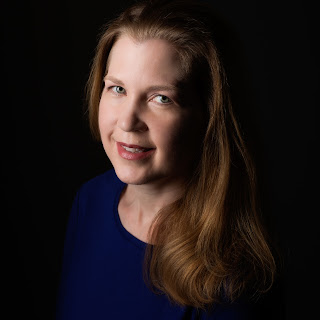
Image Credit: Joni Lorraine
Debbie Zapata grew up in a multicultural family in Austin, Texas. She enjoys helping others as a counselor and writing books for children that have heart and humor. Debbie loves creating stories about ordinary people doing extraordinary things. She believes each of us has the ability to make the world a better place. Debbie lives in Austin with her family. Up and Adam (Kids Can Press, May 2022 illustrated by Yong Ling Kang) is her first picture book. 


**********

Have Swag Will Travel is an occasional feature of Dawn Babb Prochovnic's blog. Dawn is the author of multiple picture books including, Lucy's Blooms, Where Does a Cowgirl Go Potty?, Where Does a Pirate Go Potty?, and 16 books in the Story Time With Signs & Rhymes series. Dawn is a contributing author to the award-winning book, Oregon Reads Aloud, and a frequent presenter at schools, libraries, and educational conferences. Contact Dawn using the form at the left, or learn more at www.dawnprochovnic.com.  

August 4, 2022

The "Listening to Live Music" Part of the Writing Life

As I've mentioned before, listening to live music is one way I feed my creative soul. 

Waiting for Blind Pilot to Enter the Stage at Pioneer Courthouse Square, July 2022

I've decided to make this pastime a bit easier on myself by creating a blog post with links to some of the bands and music venues I most enjoy.  If you are local to Portland and/or Sunriver/Bend, Oregon (or just passing through), maybe this resource will be helpful and inspiring to you, too. If so, I hope you will bookmark it and/or share it with a friend. 

Some of My Favorite Musical Artists

Blind Pilot (They do an annual show at the Liberty Theater in Astoria. We've also heard the lead singer, Isreal Nebeker, solo and The Hackles duo.)

Craig Caruthers (We've been following his work for decades)

Eel Sallad (If you love strong pipes & big emotions, you will adore Dallas Lee, who fronts this band) 

Dadweed (They are FANTASTIC--two guitars, a stand-up bass and mind-blowing vocals )

Fox and Bones (The artists who wrote and recorded this moving song, a tribute to the tremendous life of my late father-in-law, Henry Prochovnic)

Glen Phillips (I also enjoy the full band, Toad the Wet Sprocket)

The Head and the Heart (We've seen them several times -- next up is Red Rocks, summer, 2026!)

Jacob Westfall (An AMAZING songwriter and storyteller--love him solo and w/ his band)

Jonatha Brooke (Some day I hope to see her 4 Noses Show. Support her "Kitchen Covid Concerts," here .)

The Junebugs (The lead singer composed and recorded the anniversary song I wrote for my husband)

Maiah Wynne (The musical artist behind the beautiful companion song to Lucy's Blooms. Join her Patreon here) 

Mumford & Sons (We caught the tail end of their show in Verona, Italy many years ago -- one of my favorite lifetime music memories. Hope to see them there again in the future, more planfully) 

Paula Cole (I have admired and supported her work since the early 1990's. Listen to an interview here.)

Ronnie Carrier (Ronnie is a fabulous song writer and story teller. She is also a true supporter of the music community in the Portland area.)

Shawn Mullins (His songs are like stories. I especially love Twin Rocks, Oregon.)

William Topley (We've seen him countless times in Portland. I hope to see him play live at a pub in London some day). 


Other Live Performers Whose Work We've Especially Enjoyed and Would Love to See Again:

Alice Wallace (We attended a house concert when she was passing through Portland. Beautiful songs and storytelling--and she yodels! She is currently based in Nashville; would love to see her there some time!)

Covenhoven (Deep, delicious voice. captivating storyteller)

Dan Rodriguez (He put on a wonderful show at the White Eagle, Spring 2025. He has a huge following.)

Goldpine (They opened for a Fox & Bones concert we attended. Powerful songs and storytelling.)

Grace Cooper (We've seen he in Central Oregon several times; she's currently overseas pursuing an advanced science degree. My recollection is she's also a Zag!)

John Craigie (He opened for Blind Pilot at Topaz Farm, Summer 2025. Fantastic show! His music is amazing, and he is absolutely hilarious without even trying to be!)

Kathryn Claire (We attended a house concert in her home; beautiful voice, amazing fiddle player.)

Phillip Scales (We saw him at the Al's Den in 2024. Really enjoyed the show.)

Danielle Wertz (We saw her at a Joni Mitchell tribute. Her voice is beyond beautiful.)

Mitch Whitaker (We've seen him a couple of times now, and really enjoyed his thoughtful, poetic songwriting)


A Growing List of Central Oregon Performers We Love to See and Support When We're in Town:

The Color Study Music

Kara Grace Wilson

Lilli Worona

Linda Quon and Hello Trouble 

Pete Kartsounes 


Favorite Outdoor Venues (Bend/Sunriver Area):

Bend Brewing (great nachos!)

Bend Cider Co. (in Tumalo)

(the) Bite (in Tumalo)

Hayden Homes Amphitheatere (for bigger shows)

On Tap (They have an especially great beer and cider selection.  We LOVE their fire pits. Also have an indoor area and a tented area. Location of the music depends on the season.)

Ponch's Place (in the parking area of a veterinary clinic! Nice fire pits, and a tented indoor area)

River's Place (They typically have live music on Thursday and Sunday evenings. Music is indoors in the colder months.)

Silver Moon Brewing (They have the most excellent fire pits! They also have an indoor venue)

Worthy (A gorgeous outdoor stage. Also has a "hopservatory" star gazing spot.)


Favorite Indoor Venues (Bend/Sunriver Area):

Elixer Wine Bar (They have a fantastic open mic night, every Monday evening. A great way to listen to a wide variety of Central Oregon talent!)

The Lot (Food Carts and Tap House - fun vibe, great food carts, and live music every Thursday night)

Midtown Yacht Club (no boats, but fun food carts and live music)

Old St. Francis School (Additional schedule info on the main McMenamins site)

Portello Lounge (Great happy hour. We love the vibe here!)

Tower Theatre 


Other spots we visit from time to time:  

The Ale Apothecary (an artsy and rustic vibe)

Bunk and Brew (Funky, youthful vibe. Event schedule on FB)

Century Commons Taps and Trucks (in the Sunriver Business Park. Live music on Friday nights)

Commonwealth Pub (in Bend)

Cross Cut Warming Hut (a very rustic, mountain cabin feel -- also have nice fire pits!)

M & J Tavern (very friendly dive bar -- good prices and the chicken dinner is HUGE)

The Village (in Sunriver) -- hosts summer music events

Wetlands Tap House (in LaPine)


Some places on our list to try: 

Blacksmith Public House (in Redmond)

Boneyard Beer (in Bend)

Cascade Lakes (Two locations in Bend)

Legend NW Cider Company (in LaPine)


Bands in Town - Bend

Bend's Source Weekly Calendar


Favorite Outdoor Venues (Portland Area):

Topaz Farm on Sauvie Island (Family friendly, very welcoming, and beautiful setting.)

Listening to The Portland Cello Project Playing Prince Music at Topaz Farm


Favorite Indoor Venues (Portland Area):

Al's Den (a McMenamins)

Aladdin Theatre

Alberta Abbey

Alberta Rose Theatre

Alberta Street Pub

Artichoke Music 

Atlantis Lounge (at Mississippi Pizza)

Floyd's Coffeehouse & Winebar (a comfortable little spot in Ladd's Addition)

Haymaker Bar & Eatery (on N. Killingsworth)

McMenamins (other locations)

Mississippi Studios

The Muddy Rudder Public House (a great neighborhood place, with excellent food and service, too!)

The Old Church (you will be hard pressed to find a more beautiful venue)

Revolution Hall

Ringlers Pub (a McMenamins)

SingAcoustic (a beautiful new listening room for music makers and music listeners to gather together--we will be making regular visits here to support this lovely gathering space!)

Strum (guitar store and listening room combined)

White Eagle (a McMenamins)


Other Indoor Venues We Enjoy (Portland Area):

48 North Pizzeria (live music several nights a week) 

Arbor Beer Lodge

Hops on Tap

The Moon and Sixpence Pub

Polaris Hall

Portland City Grill (live piano music on T and W evenings)

Rose City Book Pub

Ross Island Grocery

The Showdown

T.C. O'Leary's (live music several nights a week)

Turn! Turn! Turn! 

Walters Cultural Arts Center


Some Places We'd Like to Try (Portland Area):

Ponderosa Lounge & Grill (at Jubitz) 

Secret Grove (coffee by day, music venue by night--currently appears to be D.J. vs. live music)


Bands in Town - Portland 

Portland Mercury's Live Music Calendar


Bookmark this page and check back often; I'll keep this page updated as my list of favorites changes and grows! 

Last revised: April 13, 2026 

June 29, 2022

Birth Stories for Books: IF THERE NEVER WAS A YOU, by Amanda Rowe

Hello readers! I have another inspiring story to share with you in today's edition of Birth Stories for Books. My guest is Amanda Rowe, author of IF THERE NEVER WAS A YOU (illustrated by Olga SkomorokhovaFamilius, 2019.) 

By Amanda Rowe and Olga Skomorokhova

Dawn Prochovnic: Welcome to the blog, Amanda. Today we get to celebrate the recent Book Birthday for IF THERE NEVER WAS A YOU. 

You shared some of what inspired you to write this story in an earlier interview with Read and Shine, but I wonder if you could recap some of that again for us here?

Amanda Rowe: I initially wrote If There Never Was a You as a poem for my children. Since I was a child, I have made greeting cards, and sometimes I write a poem for my children’s birthdays or other special occasions. I wrote down these thoughts and feelings about my kids for them – it wasn’t until later that I considered the possibility of it becoming a children’s book.

DP: What a beautiful backstory. It makes your book even more special.

Reflecting on the journey from idea to published book, is there any one moment along the way that you credit with opening the door for this particular story to find its way to publication? 

AR: Yes, when I reread If There Never Was a You and realized that the feelings are universal. I wrote it because I wanted to convey to my kids what their presence in my life meant to me. After giving it some thought, I realized that other parents might want to express these feelings to their children, but they might lack the words. Not everyone is a writer. So, I thought, what if there was a way that I could make this piece available for other caregivers to share with their children? I could imagine parents, or even aunts, uncles, or grandparents reading this to their favorite tiny people, and I thought a children’s book might be an appropriate medium for this message. So, I submitted it.

DP: Fantastic! 

When you compare the path to publication for this book to the paths to publication for some of your poems and/or non-fiction articles, what are some of the key similarities and differences in terms of the publication journeys for each?

AR: In my experience, non-fiction articles are easy to sell. They are factual information, so it’s just a matter of finding someone interested in that subject matter to pitch it to. Poems and fiction have a harder time finding homes because they have to resonate emotionally with their audience. You have to find someone who understands the sentiment and wants to take that journey. And getting a book deal is more difficult than other forms of publication because it is about much more than likability or even the execution. You can have the most well-written, touching story, but if the publisher can’t market it or it isn’t a good fit for their list (which could happen for many reasons), they could love it and still pass on it. Writing can be a soul-crushing business that way. Every time I get offered a publishing contract, I consider it a miracle.

DP: A hard-earned miracle, I'd say!  

Your bio mentions that you edited The Genome Factor. Based on your experience on both sides of the table, author and editor, what professional advice or suggestions do you have to offer to aspiring authors? 

AR: No matter what you’re writing, it is vital to have a fresh set of eyes on your work – someone else to point out flaws, whether big picture issues, typos, or grammatical errors. Tackle the big picture issues first – plot, story arc, characters (or flow or fact-checking for non-fiction) – and once you’ve got your narrative finalized, you do the line-by-line edits for typos and grammatical errors, spelling mistakes, etc. Every step of the way, it helps to have someone else read your work and provide feedback – someone who will feel comfortable offering constructive criticism and pointing out your mistakes. It can be awkward, but it’s much less embarrassing to have your editor (or a friend) point out errors and fix them pre-publication than to see your mistakes in print for the rest of your life.

DP. Excellent advice! 

Speaking of advice, one of my favorite parts of being an author is connecting with young readers at school, library, and bookstore visits, and I’m always looking for new pro tips. Your website showcases an active outreach to young readers at a wide variety of venues. Based on this experience, what professional advice or suggestions do you have for fellow author/presenters in terms of planning successful (in-person and/or remote) events?

AR: For me, the key to successful events is connection. I connect with readers by being my authentic self and allowing them a glimpse of the person behind the job title – by simply being Amanda instead of ‘the author.’ Like so many of my readers, I’m a mom. I’m an employee; I am a person who makes mistakes and tries to do better. And I used to be a little kid with big dreams. 

To connect with my audience, I tap into those similarities; I try to let down my guard and have a real conversation. 


Image Source: Amanda Rowe

That’s what I miss most about my book tour – meeting new people and having conversations with them about our lives – our hopes, our fears, our disappointments. When I talk to children, I focus on hopes and dreams – what are their talents? How do they want to use them? What do they hope to do or to be one day? I ask those questions with adults, too, but I frame the conversation with more of an “it’s not too late” perspective. I explain to them that I put my dreams on hold for many years to raise my kids, get a job, and survive, but they were always there in the background. Eventually, I was able to carve out time to start pursuing them again. I like to encourage adults and children to keep dreaming, setting goals, and considering what is possible. Because anything is possible if you want it enough, and you’re willing to work for it. I think the key to success isn’t talent – it’s tenacity. You can learn skills and study and hone your craft, but if you don’t want it enough, you’ll never get anywhere, no matter how talented you are. 

Having those kinds of heart-to-heart conversations is what makes the most memorable events. And also, stickers! If you’re a children’s book author, get some stickers with your book cover on them. Kids love stickers, and they stick them to their clothes or their backpack, and then when they get home, they are reminded of your book again – and so are their parents.

DP: I love your heartfelt and authentic approach, Amanda. (And, I couldn't agree more on the stickers! Stickermule is my favorite source.)

In addition to authoring and promoting your book and other freelance projects, working your day job, and raising children (which has included navigating some serious health challenges), you also maintain a lifelong commitment to giving and volunteerism. How do you balance the time between your different writing projects and the different aspects of the publishing business alongside an active work and home life?

AR: It’s all about priorities. My kids come first. Now that they are older and more independent, they take up less time, which frees up some time for my writing career.

Because I have a full-time day job, I can only work on my writing career on nights, weekends, holidays, or vacation days. So, I do. I can’t tell you how many sunny days I’ve spent indoors hunched over my keyboard; how many invitations I’ve turned down; how many early mornings or lunch breaks I’ve spent writing. Progress requires sacrifice. If you want something, you have to give something else up. 

I am an introvert by nature, so giving up social engagements hasn’t been a problem for me, but I don’t spend as much time with my friends and extended family as I would like to. Also, there are many weekends when I’d love to read a book or take a day trip, but I write, edit, submit, or work on my social media instead. I am planting seeds, and hopefully one day, the harvest will come, and I won’t have to work quite as much. But I’m not there yet, so discipline is the key.

DP: Thanks for this unvarnished perspective, Amanda.

If you could go back in time, what would you tell your pre-published self? Or, said another way, what do you know now, that you wished you would have known a bit earlier?

AR: I wish I had understood sooner that being an author is like being a small business owner. As with any business, there are expenses and practical matters that need to be dealt with. I imagined the author’s life as all about art and creativity, and there is some of that. But the part that I love – the writing – is the smallest piece of the puzzle. I spend much more time on the business end of things – doing things that I never wanted to do that I don't enjoy, but that are necessary if I want to make progress. It is hard to get a book deal; it is even harder to get an agent. There is so much time spent on submitting, negotiating, social media and promotion. If you’re successful, maybe later on you can afford to hire someone to handle your social media, and you have an agent to submit things and negotiate contracts on your behalf. But in the beginning, you have to manage all of those things yourself – in addition to your everyday responsibilities like housework, raising children and working a full-time job. It’s exhausting and often you are spending more money than you are making.

However, not all is lost. Although being a children's book author has not been financially profitable for me so far, I have gained something worth more to me than money – purpose. If I can offer hope to a struggling parent, make a child believe in themselves, help caregivers express their love for their little ones or help families make memories together, then everything I’ve sacrificed will be worth it.


Image Source: Amanda Rowe

DP: I'll bet your book has brought many special moments for your readers.

Is there something you wish someone would ask you about your path to publication for IF THERE NEVER WAS A YOU that you haven’t had the opportunity to share yet? 

AR: I have mentioned in a few interviews that this book got picked up quickly by a publisher, and I didn’t write it intending it to be a book, so my becoming a children’s book author was unexpected. That might give people the impression that this has been easy; that is incorrect. I have been writing since I was seven years old in one form or another. I have tried and failed to have hundreds of pieces published, and I experimented with various genres of writing before becoming a children’s book author. I have also tried numerous writing methods and found that when I try to write like other people do, I get frustrated and feel like a failure. But when I write my way, I feel like I’m where I belong, doing what I am supposed to be doing. I think that’s when great art happens – when the artist allows the work to flow through them instead of trying to force it to be how they envisioned it. So often, the things I try to force do not work, and the things that I don’t plan take on a life of their own and end up being more well-received than I imagined. That doesn’t mean that I don’t need to study the craft of writing and improve my skills; I do. But I need to apply those lessons to using my voice, my way.

So, what I’ve learned is this: if you love doing something, keep doing it. If you’re not successful with it, try an alternate route. Sometimes you have to flail about a bit before you find your niche. But make sure you are using your gifts and not trying to mimic someone else’s, because that never ends well.

Life rarely works out the way we plan, but sometimes it works out better. When you let go of the way you imagined things should be, you open the door to infinite possibilities of what they could be.

Image Source: Amanda Rowe

DP: This is such a powerful perspective, Amanda. Thank you so much for sharing. 

Do you have anything you’d like to tell us about what you’re currently working on? 

AR: I am working on multiple projects right now which is not unusual for me. I am always in the middle of reading – and writing – at least three books. The project currently closest to my heart is a book that I’ve written for chronically ill children. As the parent of a child with a debilitating disease I’ve spent countless hours at hospitals and doctors’ offices. I’ve met so many other families like ours, and I want to offer them encouragement. I want to make them feel seen and understood so I wrote a book that I hope will be in hospitals and doctors’ offices someday to brighten the lives of chronically ill children and their families. Also, to express gratitude for healthcare workers, who have my utmost respect and appreciation.

DP: I look forward to news of that project coming to fruition some day. It sounds like a much needed and meaningful book. 

Thank you so much for sharing your Birth Story for IF THERE NEVER WAS A YOU with us, Amanda! It's been great to have you on the blog.

AR: Thank you for having me, Dawn, and for working so hard to promote your fellow authors. I appreciate the opportunity to connect with you and your readers.

Friends, I've said it before, and I'll say it again: the best way to thank an author whose insights and information have been helpful and/or intriguing to you is to support their work. Buy their books. Request them from your library. Read and share them with others. IF THERE NEVER WAS A YOU is available everywhere books are sold

********** 

Amanda Rowe is a children’s book author, an academic administrator, an amateur chef, a travel enthusiast, a blogger, and a book hoarder. If There Never Was a You is her first children’s book. Her next children's book, There Goes My Heart, is forthcoming with Familius in 2024. Visit her at https://amandarowewrites.squarespace.com/


**********

Birth Stories for Books is an occasional feature of Dawn Babb Prochovnic's blog. Dawn is the author of multiple picture books including, Lucy's Blooms, Where Does a Cowgirl Go Potty?, Where Does a Pirate Go Potty?, and 16 books in the Story Time With Signs & Rhymes series. Dawn is a contributing author to the award-winning book, Oregon Reads Aloud, and a frequent presenter at schools, libraries, and educational conferences. Contact Dawn using the form at the left, or learn more at www.dawnprochovnic.com.  


June 22, 2022

The "Showcases, Media Coverage, and Shout-Outs" Part of the Writing Life

I'm not gonna lie...it feels good when my creative work receives positive recognition—or even just a little press! In fact, I keep a running list of media coverage, here. It's a nice page to stroll through on the days I need a pick-me-up. 


Some recent media highlights include my Story Time with Signs & Rhymes series being included in a Book Riot round-up of books about sign language for toddlers, and my hometown newspaper including Lucy's Blooms in a roundup of children's books by Oregon authors.

Today I learned that the Children's Book Council included Lucy's Blooms (illustrated by Alice Brereton, published by West Margin Press) in their #LoveMakesTheWorldGoRound summer showcase. I'm quite delighted that this book of my heart has been included in such an esteemed list! I hope you'll check it out. (While you're there, take note of two other books in particular: Made for Me and The Proudest Color, two fantastic books published by Familius, the publisher of my next scheduled book.)

If you're not familiar with Lucy's Blooms, you can view/listen to the book trailer here (with original music written and performed by Maiah Wynne, the lead vocalist for Alex Lifeson's new band, Envy of None): 


and you can view the book reading I recorded for my book launch here:


Lucy's Blooms is available wherever books are sold. You can support my creative work (and your local indie bookseller) without leaving the comfort of your home by purchasing your books through Bookshop

Thanks for celebrating with me! 

June 15, 2022

Birth Stories for Books: THE THREE LITTLE SPRIGS, by Terry Ann Marsh

Hello readers! It's time to dig into another path to publication story in the latest edition of Birth Stories for Books. Today's guest is Terry Ann Marsh, author of THE THREE LITTLE SPRIGS (illustrated by Lintang Pandu Pratiwi, published by Brandylane Publishers/Belle Isle Books, July 2022.) 

by Terry Ann Marsh and Lintang Pandu Pratiwi

Dawn Prochovnic: Welcome to the blog, Terry. I’ve enjoyed reading about your publishing journey for your debut picture book, THE THREE LITTLE SPRIGS, on your blog, and I’m delighted to be able to ask some specific questions about your experience here.  

Your online bio indicates that you’ve spent decades singing and performing for adults and kids, and that you’ve “put down the mic and picked up the pen,” transforming stories and songs from your children’s shows into submittable manuscripts. Can you share with us how the idea for this particular story originally came to be?

Terry Ann Marsh: I’d love to -- and thanks so much for inviting me to be a part of your blog!

I was contemplating the concept of fractured fairy tales, wondering if there was a fairy tale that would work for me. As an entertainer, I was always on the lookout for ideas that would not only be entertaining, but could also be used by a parent or teacher as a jumping off point for a conversation on a kid-friendly theme. I probably thought about it for a few months, and then one day I asked the big question: What if instead of using straw, wood and brick to build their houses, the three little pigs had to use a character trait to build their house. And so, The Three Little Sprigs who live in the Woodland Kingdom was born.

DP: What a fun backstory and concept for a children's book. 

I’d also like to hear more about the process and timeframe between your initial idea for this book and the manuscript that was formulated fully enough to submit to an editor.

TAM: What a good question! I had to go back and find my original manuscript to see how long it’s been. This story took about 3 years to develop completely. I tend to really think about stories for a while before I actually start writing them, but I would have to count that as part of the process. It also went through a couple of critique groups. I think the idea of the story appealed to everyone, but it is longer than your average picture book today, so that posed a bit of a problem. I was getting a little discouraged until I talked to an author at a SCBWI conference, who said I should submit it as picture storybook, which would allow for more words (it clocks in at 1800 words!) Happily, her advice worked.

DP: Sometimes all we need is that one new idea to help a story along!

When you compare one of your earliest drafts of this story to the version in the published book, what stands out for you in terms of what is most different? Likewise, is there anything in particular that stands out that was included in your earliest drafts and survived the revision process?

TAM: My earlier manuscript had more descriptive scenes in it because I was in love with the idea of this Woodland Kingdom where everything came alive. Toadstool caps used as sleds, dandelion heads that hung in windows as curtains, daisy blankets that hugged you back -- so much fun! But the word count needed to come down. Some scenes didn’t survive and some became illustrations.


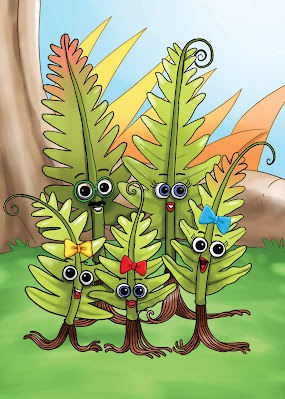
Illustrations by Lintang Pandu Pratiwi

Since it’s longer than most books in the market today, I was grateful that Brandylane Publishers allowed the story to develop completely. The Three Little Sprigs follows the timeline of the Three Little Pigs fairly closely. Instead of the Big Bad Wolf, there are Stinging Rain and Lonely Wind, who visit each house and try to blow them down, but all that takes time and words to develop. I was glad I didn’t feel the need to shorten or rush the story. 

Illustration by Lintang Pandu Pratiwi

DP: How great that you found a publisher that shared your vision for this story. 

Reflecting on the journey from idea to published book, is there any one moment along the way that you credit with opening the door for this particular story to find its way to publication? 

TAM: The writer at the SCBWI conference who told me about the picture storybook form was very helpful. She loved the book and that encouraged me to keep going with a story that I loved.

DP: That's terrific. One of my favorite parts of this business is the wonderful people I've met throughout my journey and the encouragement I've received (and continue to receive) from others along the way.  

Another favorite part is connecting with young readers at school, library, and bookstore visits, and I’m always looking for new pro tips.  Based on your years of experience performing for adults and kids, what professional advice or suggestions do you have for fellow author/presenters in terms of planning successful events? 

TAM: My number one rule for entertaining — don’t be boring! Have more than enough material, so there are no long pauses, or gaps in your presentation. When people get nervous they tend to speak fast, so your 10 minutes of material might end up being 5! Have plenty to say, sing, act out or do.

Kids love to interact, so give them plenty to do, if possible. It’s better to say that you didn’t use all the stuff you brought, than to say you didn’t bring enough (learned that the hard way!).

DP: Great tips! I'll bet your events are loads of fun! 

Speaking of events, it’s clear that you and I share a preference for in-person events over virtual, but given that your book will launch in the midst of (a still ongoing!) pandemic, I’d be especially interested in hearing what you have found to be the most effective and meaningful way(s) to connect with young readers and book buyers during this challenging time.

TAM: This is the most challenging thing for me. Social media is definitely outside my comfort zone. Fortunately, my youngest daughter is a branding expert, and she will help me, although she assures me I am not ready for Instagram! I give myself props for developing a webpage, and getting on Facebook, although I need to be more consistent. If need be, I can jump into the world of video blogs and Zoom meetings, but I am truly hoping that by the time my book comes out (maybe April?), in-person events will be back on.   

DP: Gosh, I sure do hope so, Terry! 

One of my favorite creative experiences has been collaborating with music professionals to create original songs and videos for my picture books (you can view a recent collaboration here.) Given your decades of singing experience, do you have any plans for bringing together these two forms of creative expression?

TAM: I loved the video for your book — such a great idea!

DP: Thank you! It was such a fun project to work on. 

TAM: I will definitely use some of my music to enhance my library/school visits. I have a lot of songs that encourage activity, and they are always fun. I don’t have a specific song for Sprigs, but I do have several that I can use that will speak to some of the themes in the book. I also have one song, Kingdom of the Jewels, that I would love to see as a book.

DP: I'll look forward to that project coming to fruition one day, too.

If you could go back in time, what would you tell your pre-published self? Or, said another way, what do you know now, that you wished you would have known a bit earlier?

TAM: I think I would tell myself not to be discouraged because things don’t, and won’t, happen as quickly as I want them to. Being published is more of a ‘in-it-for-the-long-haul’ process. There’s a lot to learn, so enjoy the process of learning as you go. Also, writing is a very subjective craft. What one person can love, another can hate. So, stay true to what you believe in and what you want to say, and find the best way to say it. 

DP: Thanks for that, Terry. That's excellent advice. 

Is there something you wish someone would ask you about your path to publication for THE THREE LITTLE SPRIGS that you haven’t had the opportunity to share yet? 

TAM: Who is the best audience for The Three Little Sprigs? The reason I like this question is because I think the book has much to offer to elementary grades. I have a 4th grade teacher friend who will be using it for her biology science this spring. I make mention of 10 different types of plants found in a forest, and ask 2 good science questions on the teacher page. Also, a book about character traits allows for very teachable moments. The last question on the teacher page is, “If you were to build a house with a character trait, which one would you use?” It can open up great discussions. 

DP: What a great response to this question, Terry. I hope your book finds its way into the hands of many young readers.  

Do you have anything you’d like to tell us about what you’re currently working on? 

TAM: I am in an advanced writer’s submit/critique cohort with SCBWI, and I submitted a book about the numbers 10—100. After the first critique last month I realized I had to deconstruct the whole thing and come at it from another angle, which I did! The result has been wonderful. I will continue with this manuscript and see where it will take me.   

DP: Best of luck with this new project, Terry, and thanks so much for sharing your Birth Story for THE THREE LITTLE SPRIGS with us!

TAM: Thank you, Dawn. It was fun!

Friends, the best way to thank an author whose insights have been helpful and/or inspiring to you is to support their work. Buy their books. Request them from your library. Read and share them with others. It sounds like THE THREE LITTLE SPRIGS would make an excellent addition to school and classroom libraries (and it would be a great complement to LUCY'S BLOOMS if you already have that one on your shelf.) 

********** 

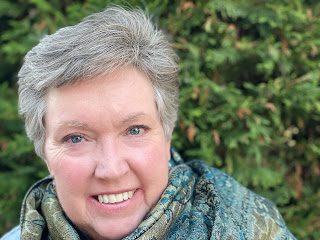
Terry Ann Marsh has been a singer and entertainer for over three decades. She combined Big Band standards, blues, and show tunes in her Showstoppers & Chartoppers! Program. She then went on to write and perform The Music, Movement & ‘Magination Show! a preschool/Kindergarten-level program full of original stories, songs and skits. 

Encouraged by the success and positive feedback from her children’s show, Terry began converting the songs and stories from her live performances into book form. Now, instead of acting or singing her characters into existence, she brings them to life in the pages of her books.

Terry has a great love for theater and has performed in many shows in theaters around Baltimore, including Annie, Fiddler on the Roof and Bye, Bye, Birdie. Eventually, her love of musical theater led her to become a music teacher at Greater Grace Christian Academy, where she directed many theater productions.

Whether it be through music or her books, Terry is a storyteller at heart. She feels every song or story has a purpose – to encourage, educate and enlighten. 

**********

Birth Stories for Books is an occasional feature of Dawn Babb Prochovnic's blog. Dawn is the author of multiple picture books including, Lucy's Blooms, Where Does a Cowgirl Go Potty?, Where Does a Pirate Go Potty?, and 16 books in the Story Time With Signs & Rhymes series. Dawn is a contributing author to the award-winning book, Oregon Reads Aloud, and a frequent presenter at schools, libraries, and educational conferences. Contact Dawn using the form at the left, or learn more at www.dawnprochovnic.com.  

June 8, 2022

Birth Stories for Books: A FAMILY LOOKS LIKE LOVE, by Kaitlyn Wells

Here comes a treat, readers! 

I recently had the opportunity to interview Kaitlyn Wells about her debut picture book, A FAMILY LOOKS LIKE LOVE, (illustrated by Sawyer Cloud, Penguin Random House/Flamingo Books, May 31, 2022). Today, I get to share that interview with you.

by Kaitlyn Wells and Sawyer Cloud

Dawn Prochovnic: Welcome to the blog, Kaitlyn. I’m looking forward to learning more about the path to publication for your debut picture book, A FAMILY LOOKS LIKE LOVE. 

In an earlier interview you shared that the inspiration for this book was based on heartbreaking experiences you had growing up as a biracial child. I wonder if you could share more specifically how and when the idea came to you to write about these experiences in the form of a children’s book featuring a young pup who looks different from her doggy siblings? 

Kaitlyn Wells: Honestly, reliving a painful childhood experience wasn't the first thing I wanted to write about, but friend and fellow author Nancy Redd reminded me that it's OK to put yourself into your art and tell empowering stories. I thought about what I want other people to know about what it felt like to be told you didn't belong and that your family wasn't your own, simply because of the color of your skin. Along the way, I remembered that my dog Sutton looks completely different from her own family, too. She's a Chihuahua-mix with a brown tricolor coat. Two of her siblings have scruffy blond coats, and another has a black tricolor coat. Sutton's also a dog who sees the best in everyone and loves you no matter what you look like. It just seemed like telling a difficult story with my dog as the conduit fit perfectly with what I was trying to do, and made it a little bit easier to write the story too.

Interior Image from A Family Looks Like Love

DP: It's so nice to have the backstory, Kaitlyn. Thanks for sharing it with us.

In addition to writing (and reading!) books for kids, you are an award-winning journalist, and you’ve written for a long list of different publications. This suggests you have quite a bit of experience submitting ideas to editors, and yet the children’s book publishing industry can pose its own unique challenges. I’d like to hear about the process and timeframe between your initial idea for this book and the manuscript that was formulated fully enough to submit to an editor. 

KW: Looking back, I've been writing stories since middle school. I've been honing my craft—as a writer, journalist, author or whatever you want to call me—my entire career. With this particular manuscript, I began scribbling down thoughts for the book in August 2019. But because of a mix of perfectionism and imposter syndrome, I didn't write my first draft until December 2019. From there, I went through several revisions with my critique partner. That same partner and friend shared my manuscript with her agent to ask for advice on what I should do next. Then things took a surprising turn. The agent, Jane Startz fell in love with the manuscript and offered to represent me. I did my research, we had a great conversation, and I signed with her that following May. After a few more revisions we went on submission. At that point, it became emotionally draining with every "no" we received from editors and publishing houses. My story was an #ownvoices manuscript, so it felt like every rejection was a reminder that my voice, that my lived experience, wasn't good enough for the publishing world. One day, I finally received good news, and in September 2020 I accepted an offer with Penguin Random House/Philomel Books (currently under Flamingo Books). Now, you'll be able to find A FAMILY LOOKS LIKE LOVE in bookstores on May 31, 2022! 

DP: That's quite a path-to-publication, story, Kaitlyn! Hooray! 

KW: Thank you! Looking back, I'm still surprised by how fast the process went and I believe my book publishing journey isn't typical. Although, just saying that out loud, I'm reminded that I don't have to justify my journey and I need to push imposter syndrome aside (yet again). So, correction: I didn't luck into anything during the process. I worked incredibly hard and earned everything I have achieved.

DP: Indeed! 

Reflecting on the journey from idea to published book, is there any one moment along the way that you credit with opening the door for A FAMILY LOOKS LIKE LOVE to find its way to publication? I’d also like to hear if there is anything in particular that you bring from your other research and writing experiences that helps you be more successful in your role as a children’s book author?

KW: All of the credit in the world goes to my colleague, Nancy Redd, who believed in me. Well, I should say my mother is the one who's always believed in me, followed by my wonderful husband. But in this particular instance, it was Redd who pushed me to write this particular picture book at this moment in time, and opened another door by sharing the manuscript with her agent. I will also say that our meeting was an accidental encounter. Redd and I live on opposite coasts in the U.S., and we only know one another because one day I shared a job opening at my company and she replied to the posting. I helped her through the application process by offering her cover letter and interview help, and when she landed the job our friendship grew. This is just to say that you never know what connections you make today will lead to good fortune in the future. So do the networking, be kind to everyone you meet, and put yourself out there.

DP: That's great advice, Kaitlyn, and such an excellent example of this advice in action. 

KW: I think so, too. As for the second part of your question, I'm a firm believer that skills are transferable—you've just got to know how to apply them to each new situation. I bring everything into my kidlit journey. The research and reporting skills and ability to translate complex information into compelling narratives translates well into my work as a children's book author. 

DP: What an inspiring and empowering perspective. 

When you compare one of your earliest drafts of this story to the version in the published book, what stands out for you in terms of what is most different? Likewise, is there anything that stands out that was included in your earliest drafts and survived the revision process?

KW: The first version of the story featured a not-so-friendly squirrel. I don't want to spoil the story, but that character was later replaced with a honey bee who says some "stinging" things to my main character, Sutton. 

DP: Ha! It will be fun for readers to discover this revision! 

KW: And since looks are integral to this story, I also considered the coat colors and textures of the dogs. The original version described Sutton's family as cream-colored or white (a nod to some of my own family members). But during the revision process, it became clearer to me that the story was centering whiteness, which wasn't something I wanted to do. The dogs ended up having yellow and brown coats instead, and I like this version better because it reflects the coats of the real-life Sutton's siblings.

Interior Image from A Family Looks Like Love

DP: This is an excellent example of how important the revision process is to the writing process. 

You write on a wide range of topics and for a variety of different publications in your role as a journalist. You also publish a newsletter "that explores how Black, Indigenous, and womxn of color navigate the world,” and you are engaged in many activities and initiatives, such as volunteering for organizations like the ASPCA and standing up for banned books. How do you balance the time between your different writing projects and the different aspects of the book publishing business alongside an active personal life?

KW: Oh goodness, I am nowhere near on top of my game. For example, I will admit my newsletter isn't as active as I would like it to be. That's all to say that my work-life balance often has its struggles. But honestly, I love being busy and learning and growing as a person. I love helping others, especially animals, and if I can do something to make the world a tiny bit better, then I'm going to try. 

When it comes to finding that balance, I constantly remind myself that perfection doesn't exist, and just doing the thing is better than doing nothing at all. In general, I try to devote an hour or two to each major project with the understanding that I can always come back to it and improve upon it another day. And if I don't that's OK too because I made enough progress that allows me to check it off my to-do list. No matter what, I try to remain in the moment and find joy in the task at hand so I don't obsess about it later on. Otherwise, I think self-tormenting can detract from my entire point of creating and growing and learning and helping others. It's a constant battle, and I'm always working on finding that balance.

DP: Thanks for the healthy and helpful perspective, Kaitlyn.  I'm grateful for the reminder that we are all a work-in-progress. 

If you could go back in time, what would you tell your pre-published self? Or, said another way, what do you know now, that you wished you would have known a bit earlier?

KW: If I could go back to my childhood self who loved drawing horses and fairies, I would tell her to keep at it. I desperately wish I had developed my illustrator skills as there's a lot more freedom to tell stories a certain way when you have a strong say on both the words and images associated with your books. Then I would tell my adult self to just get the words out on the page. They don't need to be perfect because they can always be improved upon later. Just write it down. Come back to it later. Also, don't be afraid to write more stories than you think people want to read because, honestly, the world can always use empowering tales by a strong, Black biracial woman. Lastly, I would tell both selves that you deserve to be here, and don't let anyone tell you otherwise.

DP: Yes, to all of this. 

Is there something you wish someone would ask you about your path to publication for A FAMILY LOOKS LIKE LOVE that you haven’t had the opportunity to share yet? 

KW: What I will say is that every child matters. Everyone deserves to be represented in the books that they read. Don't be afraid to push boundaries and stay true to the authentic stories that you want to tell. 

If someone tells you that your experiences as a diverse author don't have merit, surround yourself with people who respect you and your art. If someone actively keeps your story and the stories of your literary peers out of the hands of readers, know that you can do something about it. You can report book censorship to the American Library Association or the National Coalition Against Censorship, and run for local office to combat proposed censorship laws. 

DP: Thank you for this, Kaitlyn. I know some of our readers really needed to hear these words and receive these resource links today. 

Do you have anything you’d like to tell us about what you’re currently working on? 

KW: I have so many unpublished stories in the works. Right now, I'm excited about my upcoming biographical STEM picture book. I hope to announce it soon. I encourage you to subscribe to my newsletter for updates. (Shameless plug, I know.)

DP: Shameless plugs are welcome here! 

Thanks so much for sharing your Birth Story for A FAMILY LOOKS LIKE LOVE with us, Kaitlyn! 

KW: Thank you for inviting me to participate! And before I forget, you can always snag a signed copy of A FAMILY LOOKS LIKE LOVE with one of my local indies. Happy reading!

DP: Dear readers, you've heard me say it before: the best way to thank an author whose insights have been helpful and/or inspiring to you is to support their work. Buy their books. Request them from your library. Read and share them with others. A FAMILY LOOKS LIKE LOVE is available everywhere books are borrowed and sold, including your own local, indie bookstore

********** 

Image Credit: Sarah Kobos
Kaitlyn Wells (she/her) is an award-winning journalist whose work has been featured in The New York Times, The Wall Street Journal, and The Washington Post, among others. Her commentary on diverse literature can be found in The New York Times Book Review, BookPage, and Diverse Kids Books. Her debut picture book A Family Looks Like Love arrives May 31, 2022 with Penguin Random House/Flamingo Books. She lives in New York City with her wonderful husband, rambunctious dog, and demanding cat. Visit KaitWells.com to subscribe to her newsletter that explores how Black, Indigenous, and womxn of color navigate the world. And follow her on Facebook, Instagram, TikTok, and Twitter


**********

Birth Stories for Books is an occasional feature of Dawn Babb Prochovnic's blog. Dawn is the author of multiple picture books including, Lucy's Blooms, Where Does a Cowgirl Go Potty?, Where Does a Pirate Go Potty?, and 16 books in the Story Time With Signs & Rhymes series. Dawn is a contributing author to the award-winning book, Oregon Reads Aloud, and a frequent presenter at schools, libraries, and educational conferences. Contact Dawn using the form at the left, or learn more at www.dawnprochovnic.com.